Swords
Three of Swords Tarot Card Meaning
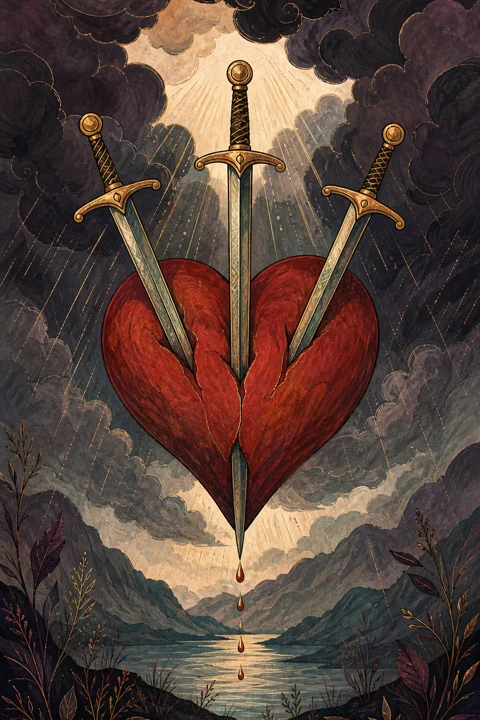
Three of Swords
heartbreak / sorrow / painful truth
Meaning at a glance
Upright
Reversed
Three of Swords Tarot Meaning
Three of Swords Upright Meaning
Three of Swords draws attention to heartbreak, sorrow, and painful truth. Name the hurt directly and avoid turning pain into a permanent story about yourself or another person.
Three of Swords Reversed Meaning
Three of Swords reversed may point to healing, forgiveness, and lingering pain. The difficulty around heartbreak may be beginning to loosen, with healing describing the first stage of repair rather than an instant resolution.
How to Read Three of Swords in a Tarot Spread
Three of Swords Daily Meaning
For example, name the hurt directly and avoid turning pain into a permanent story about yourself or another person.
Three of Swords Love Meaning
In relationships, heartbreak, separation, betrayal, grief, or a difficult truth in a relationship; reversed can indicate forgiveness, recovery, or wounds that still need attention.
Three of Swords Career Meaning
In work, money, or creative practice, a painful decision, rejection, conflict, or disappointing news; reversed can show recovery, repair, or fear of revisiting the issue.
Three of Swords Advice
Name the hurt directly and avoid turning pain into a permanent story about yourself or another person. Use heartbreak as an observable standard rather than treating the card as a forecast.
Three of Swords Symbolism and History
Three of Swords Symbolism
The imagery of Three of Swords in the Rider-Waite-Smith tradition shows the red heart pierced by three swords, the rain, the storm clouds, and the stark absence of human figures. These details ground heartbreak, sorrow, and painful truth in a specific scene; other decks may emphasize different symbols.
Three of Swords History
Three of Swords is presented here through the Rider-Waite-Smith visual tradition, while its earlier history belongs to tarot's suited-card structure. For broader context on Three of Swords, the linked overview explains the 1909 deck and Pamela Colman Smith's role in its influential visual language.
Read the shared Rider-Waite-Smith history overview for publication context that applies across the deck.
Three of Swords Journal Prompts
- What truth hurts but also clarifies the situation?
- What would healing require beyond simply suppressing the pain?
Editorial details
- Published by
- Tarot Daybook
- Last content review
- 2026-08-01
- Tradition and source basis
Rider–Waite–Smith-oriented interpretation, checked against the references below and presented as reflective guidance.
- Role of automation
- Automation assists with drafting, consistency checks, and regression testing; Tarot Daybook remains responsible for publication.
Read this card in context
Card meanings become clearer inside a spread position. Try a public daily reading or choose a protected spread for saved notes.