Tarot History
Rider-Waite-Smith Tarot
The Rider-Waite-Smith deck shaped modern tarot by turning the Minor Arcana into memorable scenes that many decks still follow.
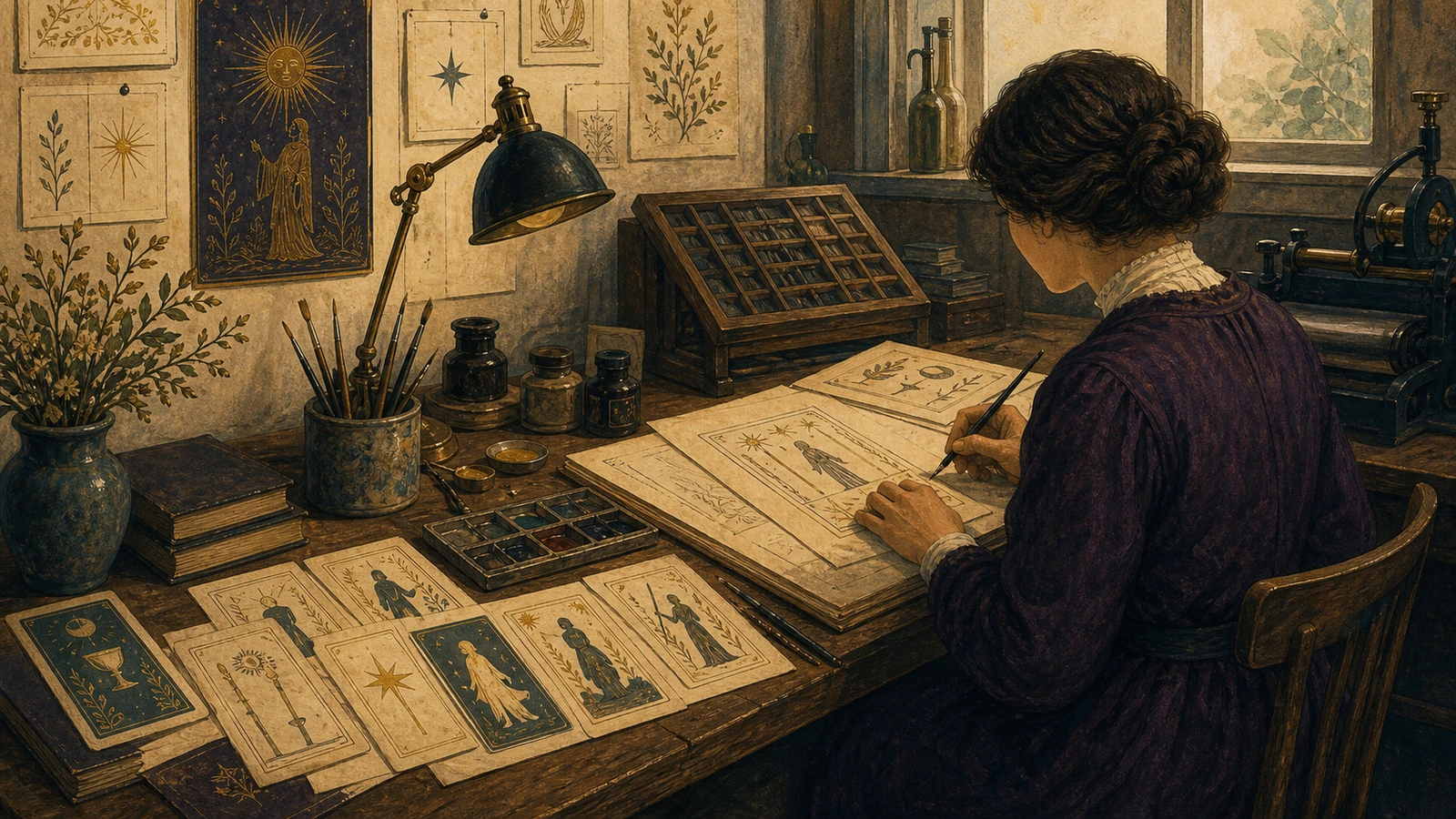
The Rider-Waite-Smith tarot was published in 1909 by Rider & Son. A. E. Waite designed the deck within the esoteric atmosphere of the early twentieth century, and Pamela Colman Smith created the artwork. Her contribution is central: the deck became famous largely because its images made tarot easier to read visually.
Its biggest shift was the fully illustrated Minor Arcana. Earlier pip traditions often showed arranged suit symbols, but Smith painted scenes for the numbered cards: a figure carrying wands, a person resting beneath swords, a family beneath cups, a worker focused on pentacles. These images gave beginners immediate emotional and practical cues.
The deck also uses stage-like composition, gesture, landscape, and color to suggest mood. A reader can notice who is standing, who is looking away, what is heavy, what is offered, and where movement is blocked. This made the cards feel like small dramatic moments rather than abstract symbols alone.
Because so many twentieth- and twenty-first-century decks adapt the Rider-Waite-Smith structure, its influence is everywhere. Even when the art style changes completely, the Seven of Swords, Ten of Cups, or Eight of Pentacles often keeps a recognizable relationship to Smith's original scene.
At the same time, Rider-Waite-Smith is one tradition, not the whole history of tarot. Comparing it with Tarot de Marseille and earlier decks helps readers avoid treating one modern system as timeless. It also gives proper weight to Pamela Colman Smith as an artist whose visual decisions shaped how millions of people understand tarot.
Continue studying
Move from historical context into the living card system through meanings and public spread guides.