Tarot History
Tarot de Marseille
Tarot de Marseille is a major historical tarot pattern whose clear trumps and pip cards still shape how many readers study structure.
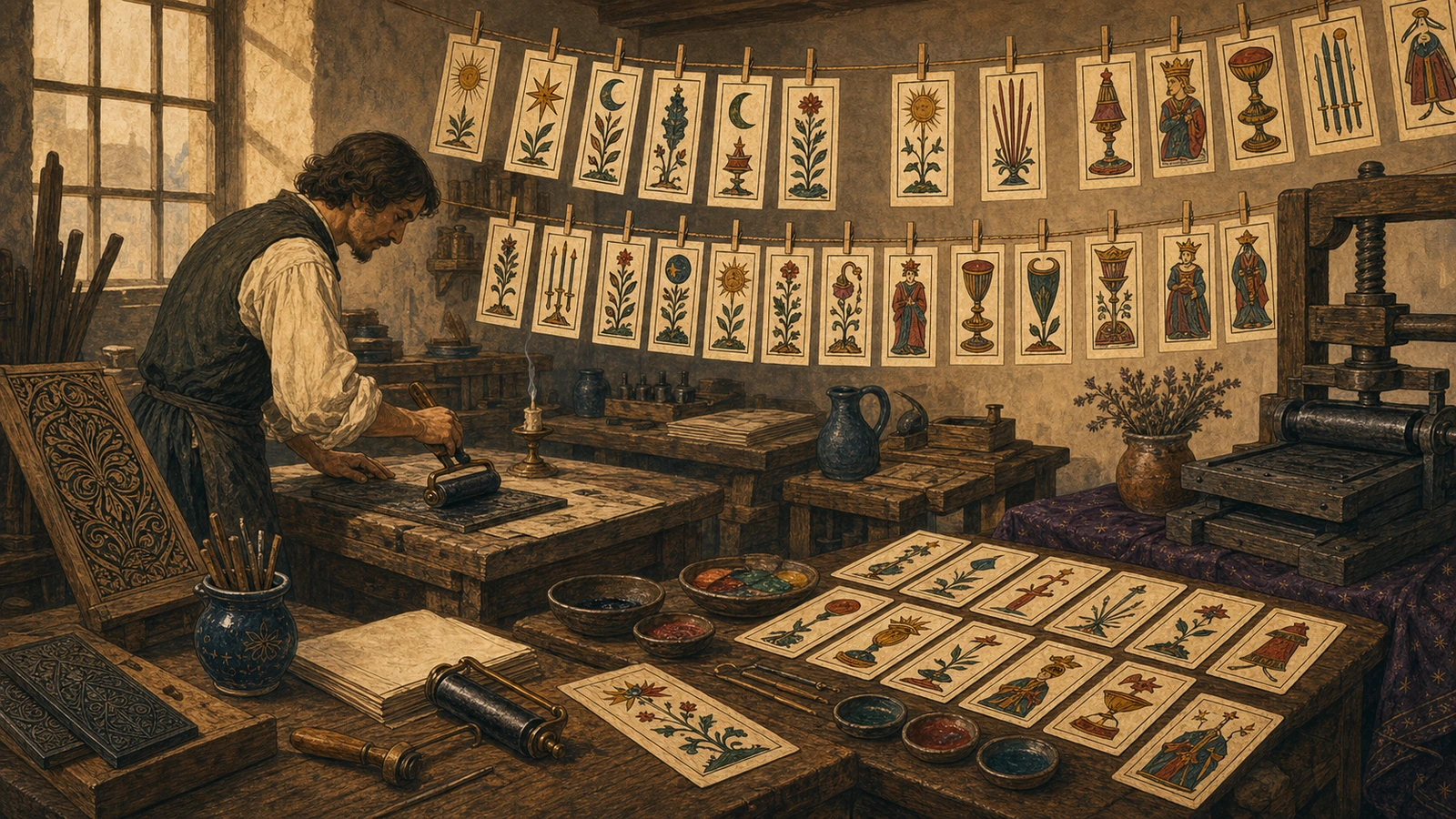
Tarot de Marseille is not one single deck by one artist. It names a broad historical pattern associated especially with French-speaking cardmakers of the seventeenth and eighteenth centuries, with roots in earlier European tarot designs. Many surviving decks share enough features that readers can recognize the Marseille family at a glance.
The style is direct and graphic: strong outlines, limited colors, French titles, and memorable trump figures such as Le Bateleur, La Papesse, La Roue de Fortune, and Le Monde. Small differences between editions matter to historians, but the shared visual language gives the pattern its durability.
The Minor Arcana are the main difference beginners notice. Instead of full story scenes on every numbered card, Marseille-style minors are usually pip cards: arranged cups, swords, wands, or coins. This asks the reader to pay attention to number, suit, repetition, symmetry, and movement rather than relying on a literal picture.
That restraint can make Marseille reading feel more demanding at first, but it is also why the tradition is so useful for learning. A five of cups, for example, is not explained by a single scene; it invites the reader to combine the number five, the suit of cups, and the visual tension of the arrangement.
Marseille remains important because it shows that tarot meaning does not have to come only from illustrated narratives. It can emerge from pattern, rhythm, sequence, and the relationship between cards. Studying it helps modern readers see the bones of tarot beneath later visual systems.
Continue studying
Move from historical context into the living card system through meanings and public spread guides.