Tarot History
Origins of Tarot
Tarot began in fifteenth-century Europe as a card game before later occult writers attached esoteric and divinatory systems to it.
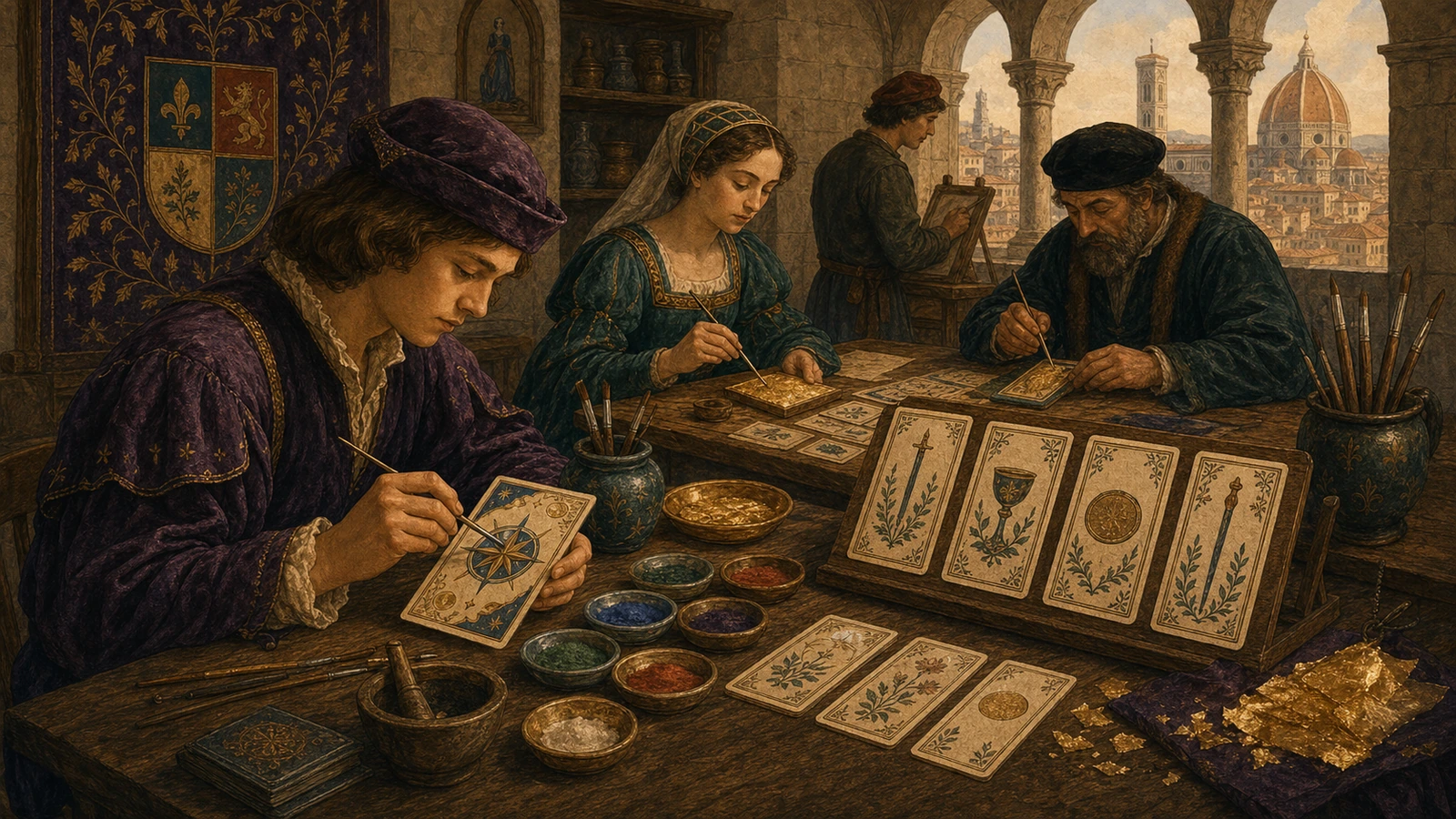
The earliest surviving tarot decks belong to fifteenth-century northern Italy, where they were used for card games rather than spiritual readings. They added a sequence of trump cards to the familiar suited cards, creating the structure that later readers would know as the Major and Minor Arcana.
Those early images were not a single hidden code. They drew on the visual world around them: courtly figures, Christian themes, virtues, fortune, death, judgment, and other ideas that people in late medieval and Renaissance Europe would recognize. The cards carried symbolism, but they also belonged to leisure, craftsmanship, and social life.
As tarot spread through Europe, printers and cardmakers adapted the designs for local markets. Names, numbering, colors, and small details changed from place to place, while the broad structure of suits, court cards, and trumps remained recognizable. This is why tarot history is best understood as a family of related traditions, not one fixed deck.
The use of tarot for divination and occult study became prominent much later, especially in eighteenth- and nineteenth-century France. Writers connected the cards with astrology, Kabbalah, Egypt, and other symbolic systems. These associations shaped modern tarot, but they are later layers placed on top of an older playing-card tradition.
For a modern reader, the origin story matters because it keeps the practice grounded. Tarot can be a reflective symbolic tool today without pretending that every meaning was present from the beginning. The deck is powerful partly because it has gathered meanings over time: game, art, myth, esoteric study, and personal interpretation.
Continue studying
Move from historical context into the living card system through meanings and public spread guides.